Forklifts are an indispensable piece of equipment in any warehouse, manufacturing plant, or logistics center. They significantly simplify the processes of moving, lifting, and stacking goods, optimizing time and resources. But what exactly is a **forklift** (or **forklift truck**), and how do you choose the right **forklift** that meets your needs?
This guide will help you understand the world of forklifts, from basic principles to the nuances of selection. If you are just starting to familiarize yourself with this special equipment or are looking for a reliable source of information before an important purchase, you've come to the right place.

What is a Forklift and What is it Used For?
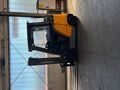
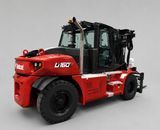
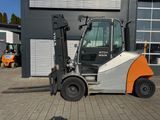
A **forklift**, also known as a **forklift truck** or **lift truck**, is a type of warehouse equipment designed for lifting, moving, and stacking loads. It is equipped with special forks that allow lifting pallets with goods and transporting them to the desired height or distance.
The primary **purpose of a forklift** is to mechanize warehouse operations. Thanks to it, manual labor with heavy loads is minimized, which increases productivity, reduces the risk of injury to personnel, and accelerates goods turnover. Without modern **forklifts**, it's hard to imagine the efficient operation of any large or medium-sized warehouse.
Main Components of a Forklift
To better understand how a forklift works, let's look at its key components:
- Forks and Carriage: Forks are the metal "tines" that lift pallets. They are attached to the carriage, which moves along the mast. There are different types of forks depending on the load.
- Mast: The vertical structure that enables the lifting and lowering of the forks. Masts can be single-, two-, or three-stage, which affects the maximum lift height.
- Operator's Cabin: The place where the operator sits, equipped with all controls, the instrument panel, and often a protective overhead guard for safety.
- Counterweight: A heavy mass (usually made of cast iron) located at the rear of the forklift. It counteracts the weight of the load on the forks, ensuring the stability of the machine.
- Engine: Provides power for the forklift's movement and the operation of the hydraulic lifting system. The engine type determines the power source (electric, diesel, gas).
- Chassis and Wheels: The base of the forklift and the wheel system that provides movement and maneuverability. Tire types (pneumatic, solid) are chosen depending on the operating conditions.
Types of Forklifts by Drive Type
The choice of drive type is one of the most important decisions, as it affects the forklift's application area, operating costs, and environmental impact.
Electric Forklifts

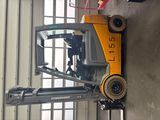
Electric forklifts are the most environmentally friendly option, powered by batteries. They are ideal for use in enclosed spaces, the food industry, pharmaceuticals, and any location where the absence of exhaust gases and low noise levels are important.
- Advantages: Zero emissions, quiet operation, low operating costs (electricity is cheaper than fuel), high maneuverability.
- Disadvantages: Limited operating time per charge, need for special charging equipment and rooms, higher initial cost.
Diesel Forklifts

A **diesel forklift** is powerful and durable equipment designed for intensive work in open areas or well-ventilated spaces. They are ideal for handling heavy loads and in challenging conditions.
- Advantages: High power and lifting capacity, quick refueling, less dependence on operating time.
- Disadvantages: High noise level, presence of exhaust gases, higher fuel and maintenance costs, not suitable for enclosed warehouses without ventilation.
Gas (LPG/Petrol) Forklifts

A **gas forklift** operates on liquefied petroleum gas (propane-butane) or gasoline, making it a versatile solution for indoor and outdoor work. They are a compromise between electric and diesel models.
- Advantages: Versatile application, quick refueling (gas cylinder replacement), lower emissions compared to diesel.
- Disadvantages: Need for gas cylinder storage, presence of some emissions, still require good ventilation in indoor areas.
Key Characteristics to Consider When Choosing
When choosing a **forklift**, several key parameters must be considered:
- Lifting Capacity: This is the maximum weight the forklift can lift. It ranges from 1 to 50+ tons. Choose with a margin to avoid overloading.
- Lift Height: The maximum height to which the forks can lift a load. It depends on the mast type and the ceiling height in your warehouse.
- Tire Type:
- Pneumatic Tires: Air-filled, provide good cushioning, and are ideal for uneven surfaces (outdoors, construction sites).
- Solid (Super-Elastic) Tires: Durable, puncture-resistant, suitable for smooth indoor surfaces.
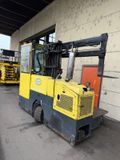
- Dimensions and Maneuverability: It is important to consider the width of the aisles in your warehouse. Special compact models are available for narrow aisles.
- Additional Options: Side-shift carriage, fork extensions, cabin with heating/air conditioning, safety systems.
Applications of Forklifts in Various Industries
The versatility of a **forklift** makes it an indispensable tool in many areas:
- Warehouse Complexes and Logistics: Receiving, storing, and shipping goods.
- Manufacturing Plants: Moving raw materials, finished products between workshops.
- Construction: Delivering building materials to the site.
- Agriculture: Work on farms, in grain storage facilities.
- Ports and Terminals: Handling cargo from ships and containers.
- Retail: Organizing the work of supermarket and hypermarket warehouses.
Conclusion
A **forklift** is a key element of efficient logistics and warehouse operations. Understanding its types, characteristics, and purpose will allow you to make an informed choice that optimizes your business processes and ensures workplace safety.
If you are looking for a reliable **forklift** or need professional advice on choosing the optimal model for your tasks, the experts at Booster Lift are always ready to help. We offer a wide range of forklifts and a full range of services.
Don't delay improving your business efficiency. Browse our forklift catalog or contact us for an individual selection!