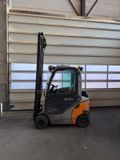
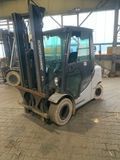
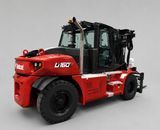
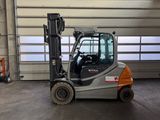
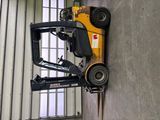
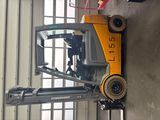
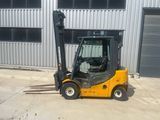
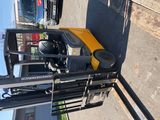
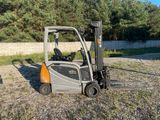
Choosing the right forklift is a strategically important decision for any business involved in warehouse logistics. One of the primary and most critical selection criteria is the power type. The market primarily offers three main categories: electric, diesel, and gas (LPG/gasoline) forklifts. Each has its unique advantages and disadvantages, making it more or less suitable for specific operating conditions.
In this detailed comparison, we will examine the key features of each type to help you determine which forklift is best suited to your tasks, budget, and environmental requirements.
Electric Forklifts: Quiet, Clean, and Efficient

Electric forklifts are the most popular choice for indoor operations due to their environmental friendliness and low noise levels.
Advantages of Electric Forklifts:
- Eco-friendly: Zero emissions make them ideal for use in food, pharmaceutical, and other industries where air purity is crucial.
- Low Noise Levels: Provides a more comfortable working environment for operators and other warehouse staff.
- Cost-Effective Operation: Electricity is generally cheaper than diesel or gas, reducing daily operating expenses.
- High Maneuverability: Due to their compact size and ability to turn wheels at a wide angle, electric forklifts are excellent for working in narrow aisles and confined spaces.
- Less Maintenance: Fewer moving parts compared to internal combustion engines, leading to less frequent and cheaper technical servicing.
Disadvantages of Electric Forklifts:
- Limited Operating Time: Depends on battery capacity and intensity of use. Requires regular charging, which can take several hours.
- Need for Charging Infrastructure: Requires specialized charging devices and potentially a separate room for battery charging.
- Higher Initial Cost: Often have a higher purchase price than comparable IC models, though this is offset by lower operating costs.
Diesel Forklifts: Power and Durability

Diesel forklifts are workhorses for intensive outdoor operations and heavy load transportation. They are known for their reliability and power.
Advantages of Diesel Forklifts:
- High Power and Lifting Capacity: Capable of handling very heavy loads and operating in challenging conditions.
- Quick Refueling: Fueling takes only a few minutes, allowing continuous operation on large sites.
- Durability: Withstand intensive loads and extreme temperatures well.
- Lower Initial Cost: Generally cheaper to purchase than electric models.
Disadvantages of Diesel Forklifts:
- Exhaust Fumes and Noise: Not suitable for indoor use without powerful ventilation. Engine noise can be an issue for operators and the surrounding environment.
- Higher Operating Costs: The cost of diesel fuel and more frequent technical servicing (oil changes, filters) increase expenses.
- Vibrations: Engine operation can create vibrations, affecting operator comfort.
Gas (LPG/Gasoline) Forklifts: Versatility and Flexibility

Gas forklifts, which can run on liquefied petroleum gas (propane-butane) or gasoline, offer a compromise solution, allowing them to be used both indoors (with good ventilation) and outdoors.
Advantages of Gas Forklifts:
- Versatility: The ability to work in various conditions makes them a flexible solution for businesses with mixed needs.
- Quick Refueling: Changing a gas cylinder or refueling with gasoline is fast, minimizing downtime.
- Lower Emissions: Compared to diesel, gas forklifts produce fewer harmful emissions, allowing their use indoors with adequate ventilation.
- Relatively Lower Initial Cost: Competitive in price with diesel models.
Disadvantages of Gas Forklifts:
- Need for Cylinder Storage: Requires safe storage of gas cylinders.
- Emissions: Although lower than diesel, they are still present, requiring attention to ventilation in enclosed spaces.
- Higher Fuel Costs: The cost of gas can fluctuate, and in the long run, it might be more expensive than electricity.
Comparison Table: Electric vs. Diesel vs. Gas Forklifts
For a clearer understanding, let's look at the key parameters in a table:
| Characteristic | Electric Forklift | Diesel Forklift | Gas Forklift |
|---|---|---|---|
| Area of Use | Indoor premises, warehouses with high sanitary requirements | Outdoor sites, intensive external work | Indoor (with ventilation) and outdoor work |
| Noise Level | Very low | High | Medium |
| Emissions | Zero | High | Low to medium |
| Initial Cost | Higher | Medium/Lower | Medium/Lower |
| Operating Costs | Low (charging) | High (fuel, maintenance) | Medium (fuel) |
| Refueling/Charging Time | Several hours (charging) | Several minutes (refueling) | Several minutes (refueling/cylinder change) |
| Maintenance | Simple, infrequent | More complex, more frequent | Medium |
| Lifting Capacity | Wide range (from light to heavy) | High | High |
Conclusion: Which Forklift is Right for You?
The choice between an electric forklift, a diesel forklift, and a gas forklift depends on many factors:
- If you work in an enclosed space where air purity, minimal noise, and high maneuverability are essential, then an electric forklift will be the optimal solution.
- For heavy outdoor work, construction, or quarries where maximum power is required and noise or emissions are not a concern, a diesel forklift will be the ideal choice.
- If your tasks require flexibility – working both indoors (with good ventilation) and outdoors, as well as quick refueling – then a gas forklift can be an excellent compromise.
Remember that choosing the right power type significantly impacts your operational productivity and overall costs. Experts at Booster Lift are ready to provide professional consultation and help you select the ideal forklift for your unique needs. Contact us today to learn more or browse our range of forklifts!